
How Long Should I Prepare for an Ayahuasca Ceremony?
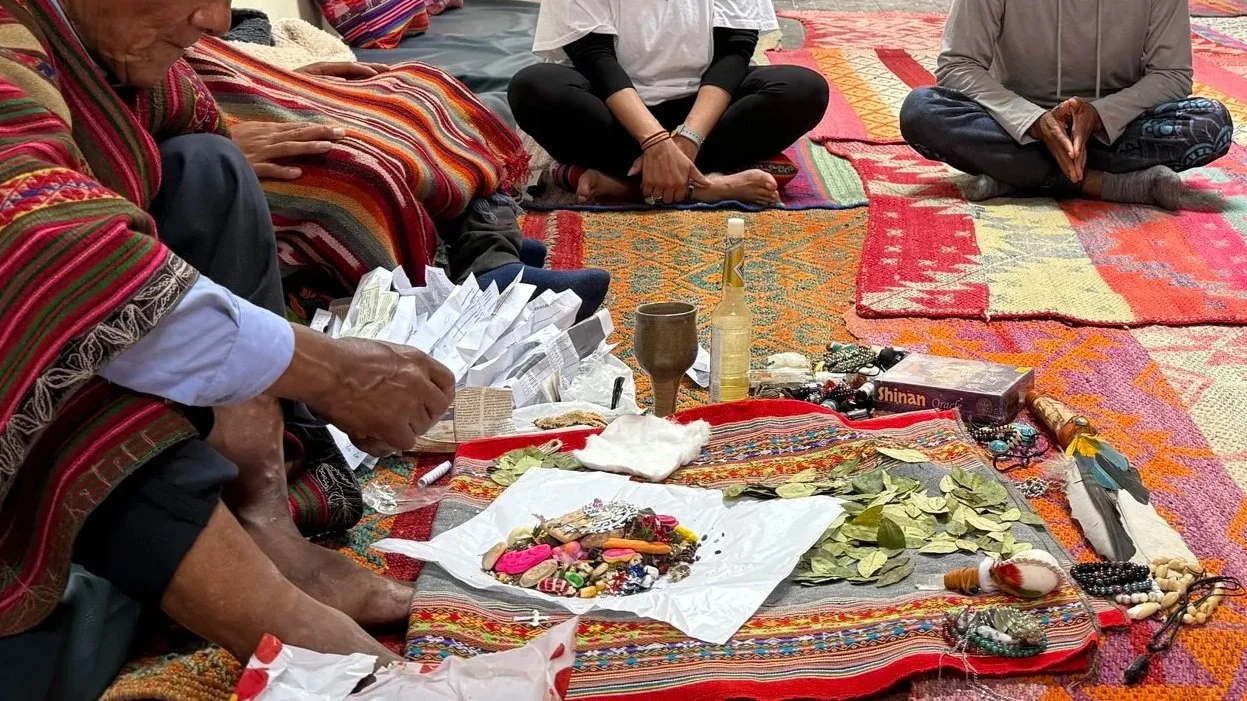
One of the most common questions people ask before attending an Ayahuasca retreat is surprisingly simple:
How long do I need to prepare?
You may have heard seven days.
Someone else may recommend two weeks.
A retreat center may provide a list of foods and substances to avoid for a specific number of days, while another tradition may describe preparation extending for weeks or months.
The confusion often comes from treating preparation as though it were one thing.
It isn't.
Preparing the diet, allowing a medication to safely leave the body, changing a long-standing relationship with alcohol or cannabis, restoring sleep, creating space for prayer, and preparing emotionally for ceremony are very different processes. They do not necessarily belong on the same timeline.
At Agape, we provide confirmed participants with specific preparation guidance for the sacrament and retreat they will attend.
But there is another question worth asking before counting days on a calendar:
What are you preparing from?
Someone who rarely drinks, takes no medications, sleeps well, and has already been living intentionally may require relatively few changes before retreat.
Someone taking a medication that may interact with Ayahuasca needs a different conversation.
Someone who uses cannabis every day may discover that stepping away from it affects sleep, appetite, mood, or dreams.
Someone who has consumed alcohol heavily for many years may need considerably more time and, in some circumstances, medical support.
Preparation should respect those differences.
This article explores how to think about your preparation timeline without turning it into a test of purity, a countdown, or a universal set of rules.
There Is No Universal Preparation Timeline
It would be convenient if everyone preparing for Ayahuasca could simply follow the same seven-day checklist.
Human beings are more complicated than that.
Our bodies have histories.
Our medications have different half-lives.
Our relationships with substances vary.
Our diets vary.
Our physical and mental health varies.
Our experience with prayer, altered states, fasting, and spiritual practice varies.
Even our reasons for coming to ceremony vary.
This is why preparation should not begin with:
How quickly can I become eligible for ceremony?
A better question is:
What does my current situation ask me to prepare?
For one person, preparation may primarily involve simplifying meals, abstaining from alcohol and recreational substances, reducing stimulation, and making practical arrangements for retreat.
For another, preparation may reveal something that needs several weeks of attention.
For someone else, responsible preparation may mean postponing ceremony.
None of these timelines makes one person more spiritually prepared than another.
They simply reflect different circumstances.
Start With an Honest Inventory
Before changing anything, take an honest look at what is already part of your life.
Consider:
Prescription medications
Over-the-counter medications
Supplements and herbal products
Alcohol
Cannabis
Nicotine
Recreational substances
Caffeine
Sleep
Diet
Hydration
Physical health
Mental and emotional health
Recent major life events
Stress
Previous psychedelic experiences
The purpose is not to create a list of everything that is “wrong.”
It is to establish your starting point.
Sometimes people begin researching Ayahuasca preparation and immediately start removing foods or supplements while overlooking something far more relevant, such as a prescription medication, daily substance use, severe sleep deprivation, or an important change in their health.
Preparation works best when it begins with honesty rather than restriction.
At Agape, that same principle guides registration.
We ask participants to disclose medications, supplements, substance use, relevant health history, and other circumstances that may affect participation.
The purpose is honesty, not approval.
Medical Safety Has Its Own Timeline
Some aspects of preparation are preferences.
Others involve safety.
These should not be confused.
Ayahuasca preparations generally combine a DMT-containing plant with Banisteriopsis caapi. The harmala alkaloids in B. caapi inhibit monoamine oxidase A, or MAO-A.
That pharmacology is one reason medications and other substances deserve careful review before ceremony.
The relevant preparation period cannot always be reduced to a universal number of days.
Different medications remain in the body for different lengths of time. Some produce discontinuation symptoms when reduced or stopped. Others may require gradual tapering under professional supervision.
This is especially important with certain antidepressants and other psychiatric medications.
Never abruptly stop, reduce, or change prescribed medication simply to attend an Ayahuasca retreat.
Agape does not prescribe medication tapers or tell participants how to discontinue their prescriptions.
When a medication raises a concern, we encourage the participant to speak with the qualified healthcare professional who prescribes or manages it.
Sometimes the answer may be a professionally guided preparation process.
Sometimes the medication should remain unchanged.
Sometimes ceremony needs to wait.
There is no spiritual virtue in making an unsafe medication decision so that a particular retreat date remains possible.
Substance Use Has a History Too
Asking when someone last consumed alcohol or cannabis provides useful information.
It does not always tell the whole story.
There is a meaningful difference between someone who occasionally drinks a glass of wine and someone whose body has adapted to years of heavy daily alcohol consumption.
Likewise, occasional cannabis use and daily cannabis use can present different preparation experiences.
Frequency matters.
Duration matters.
Dependence matters.
The reason the substance is being used can matter too.
For someone who has relied upon a substance for sleep, appetite, anxiety, emotional regulation, social comfort, or stress relief, stepping away from it may reveal something that deserves attention before ceremony.
That does not make the person unprepared.
The discovery itself may become part of preparation.
Instead of asking only:
How many days has it been since I used this?
Consider asking:
What happens in me when I don't?
That question can tell us considerably more.
Preparing After Years of Alcohol Use
Alcohol deserves particular caution because physical dependence can make abrupt cessation dangerous.
Someone who drinks heavily every day or experiences withdrawal symptoms when alcohol is removed should not suddenly stop solely to satisfy a retreat requirement.
Alcohol withdrawal can become medically serious and, in severe circumstances, life-threatening.
For someone with a significant history of alcohol use, preparation may therefore need to begin weeks or months before ceremony rather than days.
That time might involve medical evaluation, safe cessation when appropriate, improved nourishment, hydration, sleep, stress regulation, and a period of physical stability before Ayahuasca is considered.
A history with alcohol does not automatically exclude someone from ceremony.
It simply gives us more information about what responsible preparation may require.
Read: Preparing for Ayahuasca After Years of Alcohol Use
What About Cannabis?
Cannabis deserves a more nuanced conversation than simply labeling it good or bad.
Some people use cannabis occasionally.
Others use it daily.
Some regard it as medicine or sacrament.
Others use it primarily for sleep, appetite, anxiety, recreation, pain, or emotional regulation.
At Agape, cannabis is not used within our Ayahuasca or Yagé retreat offerings, and participants are asked to abstain according to the preparation guidance provided for their gathering.
For a frequent user, however, preparation may involve more than simply removing cannabis from the calendar.
After regular use, some people experience changes in sleep, dreams, appetite, irritability, mood, or restlessness when they stop.
Those experiences may influence how much preparation time feels appropriate.
There can also be spiritual value in becoming familiar with your ordinary baseline before entering another altered state of consciousness.
What does stillness feel like without cannabis?
What does sleep look like?
What emotions become more noticeable?
What role has cannabis been serving?
Those questions deserve curiosity rather than judgment.
We will explore this more fully in a separate article.
Diet Is Only One Part of Preparation
Food receives an enormous amount of attention in conversations about Ayahuasca preparation.
It matters.
But diet is not the whole preparation.
At Agape, participants receive retreat-specific guidance about food, fasting, hydration, substances, medications, and other considerations.
We encourage participants to follow that guidance without adding unnecessary extremes.
Preparing for ceremony does not require starving yourself, performing a cleanse, or trying to make your body “pure.”
A useful preparation diet is generally about simplifying.
Eat nourishing foods.
Hydrate appropriately.
Reduce excess.
Notice how food affects your energy and digestion.
Become more intentional about consumption.
Allow the body to arrive at retreat nourished rather than punished.
Someone can follow an immaculate dieta while sleeping four hours a night, hiding medication use, drinking heavily until the cutoff date, or living under extraordinary stress.
That person has technically prepared the menu.
They may not have prepared themselves.
Sleep May Need More Preparation Than Food
Sleep is one of the most overlooked aspects of ceremony preparation.
It is difficult to arrive rested when the week before retreat has been filled with late nights, travel stress, work deadlines, excessive screen time, or major changes in substance use.
Begin paying attention to sleep before the final few nights.
Can you maintain a consistent bedtime?
Are you giving yourself enough time to sleep?
Are alcohol or cannabis part of your sleep routine?
How much caffeine are you consuming?
Are you scrolling until the moment you close your eyes?
Does your mind remain activated long after your body lies down?
Preparation does not require perfect sleep.
It asks us to begin creating conditions for rest.
Morning sunlight.
Movement.
Consistent sleep and waking times.
Less stimulation at night.
Prayer.
Quiet.
Time away from screens.
These practices may appear ordinary.
That is precisely why they matter.
Sacred preparation does not always look extraordinary.
Sometimes it looks like going to bed.
Prepare Your Nervous System, Not Just Your Stomach
A person can remove every prohibited food and still arrive at retreat overwhelmed.
Work.
Relationships.
Financial concerns.
Family responsibilities.
Travel.
Grief.
Anticipation.
Fear.
Excitement.
Constant notifications.
The nervous system carries these things into ceremony too.
Consider using the weeks before retreat to create small periods in which nothing is demanding your attention.
Walk without your phone.
Sit outside.
Pray.
Meditate.
Journal.
Play or listen to music intentionally.
Spend time with people who help you feel grounded.
Reduce unnecessary conflict and overstimulation when possible.
Notice what happens when there is nothing to distract you.
This is not about manufacturing serenity before Ayahuasca.
You are allowed to arrive nervous.
You are allowed to arrive uncertain.
The practice is simply becoming more familiar with being present.
Make Room for the Retreat Before You Leave Home
Preparation is also practical.
Who needs to know where you will be?
Who will care for your children, animals, home, or responsibilities?
Are there unfinished obligations likely to occupy your thoughts throughout the weekend?
Have you planned transportation?
Are you trying to work until the last possible moment before leaving?
Do you need to return immediately to a demanding environment afterward?
Whenever possible, create space around the retreat.
Finish what needs finishing.
Communicate with the people who depend upon you.
Pack before the last minute.
Give yourself enough travel time.
Avoid building unnecessary pressure immediately before or after ceremony.
You cannot eliminate ordinary life before entering prayer.
But you can reduce some of the noise competing for your attention.
Spiritual Preparation Is Not About Manufacturing an Intention
People are often told that they must arrive at Ayahuasca ceremony with a clearly defined intention.
An intention can be meaningful.
It is not a requirement for receiving the sacrament in a good way.
At Agape, we place greater emphasis on faith, openness, reverence, and prayer than on demanding a specific answer from the experience.
You may come carrying a question.
You may come carrying gratitude.
You may be grieving.
You may simply feel called.
You may not know why yet.
Preparation can include asking what you hope to bring before the Divine Creator without deciding beforehand what the answer should look like.
Prayer might be as simple as:
Help me listen.
Help me surrender what I cannot control.
Show me what I am ready to see.
Give me courage to meet whatever arises with grace.
Or simply:
Here I am.
The purpose is not to program the ceremony.
It is to arrive willing to participate in it.
So, How Long Should You Prepare?
There is no single answer.
Some retreat-specific practices may begin several days before ceremony.
Broader lifestyle preparation may begin weeks beforehand.
Medication considerations may require a longer professionally guided process.
Long-standing alcohol or substance dependence may require months and appropriate outside support.
Emotional or physical circumstances may occasionally mean that the wisest preparation is postponement.
Instead of looking for one number, think in layers:
Retreat preparation
Follow the specific food, fasting, substance, logistical, and practical guidance provided for your gathering.
Physical preparation
Consider sleep, nourishment, hydration, movement, health, and how your body has been functioning.
Medication preparation
Disclose everything and involve the prescribing healthcare professional whenever changes may be necessary.
Substance preparation
Consider not only when you last used something, but how frequently you use it and what happens when it is absent.
Emotional preparation
Notice stress, expectations, fear, relationships, and what you may be carrying into the gathering.
Spiritual preparation
Create room for prayer without requiring a particular outcome.
Your timeline should emerge from what those layers reveal.
Do Not Rush Toward a Date
Once someone feels called to ceremony, it can be difficult to imagine waiting.
The available retreat date can begin to feel like the opportunity.
It isn't.
There will be other ceremonies.
There will be other dates.
Your responsibility is not to make yourself fit the calendar.
It is to determine whether you can approach the sacrament responsibly.
Sometimes preparation means removing a few things from your diet.
Sometimes it means sleeping more.
Sometimes it means having an uncomfortable conversation with your doctor.
Sometimes it means discovering how dependent you have become on something you thought you could easily stop.
Sometimes it means realizing that your life is simply too unsettled right now.
And sometimes it means saying:
Not yet.
Not yet is not no.
Waiting can be an act of preparation.
Preparation Begins With Where You Are
You do not need to become a different person before entering prayer.
You need to become honest about the person who will actually be entering it.
What are you consuming?
What medications are supporting you?
How are you sleeping?
What does your body need?
What happens when familiar substances are removed?
How much stress are you carrying?
What responsibilities need tending?
What are you hoping ceremony will do for you?
What might require professional support before you arrive?
These questions cannot always be answered by counting backward from a retreat date.
Preparation is not simply a countdown.
It is a relationship with the body, circumstances, habits, and spiritual life you are bringing with you.
At Agape, we believe the prayer begins before the first cup.
Sometimes that prayer begins seven days before ceremony.
Sometimes it begins months beforehand.
And sometimes the first prayer is simply having enough humility to recognize that you need more time.
Feeling Called to Learn More?
Agape Church offers intimate, two-night Ayahuasca and Yagé retreats in Texas for members traveling from across the United States.
Each gathering is limited to 10 participants and includes two sacramental prayer ceremonies, live medicine music, integration, nourishing meals, shared lodging, and community support.
Participation begins with membership followed by a separate retreat registration and review process. We ask participants to disclose medications, supplements, substance use, health history, and other relevant circumstances honestly so that preparation can begin from where they actually are.
You do not need to arrive perfected.
You are asked to arrive prepared to pray in a good way.